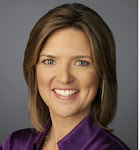
Kathleen Koch's new book, Rising From Katrina, is being released as we approach the 5th anniversary of Hurricane Katrina. Baldwin County NOW. com recently posted this interview with the former CNN reporter.
In the memoir, Koch discusses growing up in Bay St. Louis, Miss.; explores how Hurricane Katrina devastated the city and neighboring coastal communities; and the way that shining a national spotlight on the plight of all coastal residents prevented anyone from becoming a mere footnote in the shadow of New Orleans.
“I didn’t want to write just another hurricane book,” Koch said during a recent phone interview from the Clarksville, Md. home she shares with her husband and two daughters. “I wanted people to see the bigger view. These became life and death decisions — whether to stay, whether to go. And the recovery is not a sprint. It’s a marathon.”
FAIRHOPE, Ala. — A reporter usually learns early in their career they should never become personally involved in a story. But if Kathleen Koch hadn’t made a conscious (and long-thought-out) decision to instead do that very thing, an entire community might have been forgotten in the aftermath of one of this nation’s worst natural disasters.
Former CNN White House correspondent Kathleen Koch stands amidst the rubble in Bay St. Louis, Miss., not long after Hurricane Katrina nearly wiped the town off the map. Her new book, “Rising From Katrina: How My Mississippi Hometown Lost It All And Found What Mattered,” is a lesson about how the human spirit can overcome adversity, even when there seems to be little hope left. Photo by Skip Nocciolo/CNN.
The former CNN correspondent will be at Page & Palette, 32 S. Section St. in Fairhope, on Aug. 4, from 6-8 p.m., to sign copies of “Rising From Katrina: How My Mississippi Hometown Lost It All And Found What Mattered.”
In the memoir, Koch discusses growing up in Bay St. Louis, Miss.; explores how Hurricane Katrina devastated the city and neighboring coastal communities; and the way that shining a national spotlight on the plight of all coastal residents prevented anyone from becoming a mere footnote in the shadow of New Orleans.
“I didn’t want to write just another hurricane book,” Koch said during a recent phone interview from the Clarksville, Md. home she shares with her husband and two daughters. “I wanted people to see the bigger view. These became life and death decisions — whether to stay, whether to go. And the recovery is not a sprint. It’s a marathon.”
Koch said the story’s framework first centers on her family moving to Bay St. Louis when she was a teen, and how Hurricane Camille (1969) was at the time the benchmark storm to which future events were compared. As residents from Louisiana to Alabama soon discovered, Katrina’s bite would turn out to be much worse than her bark.
In fact, the physical and emotional scars left by the 2005 storm have not yet faded for many residents there, and those profiled in Koch’s book are not unlike our own neighbors — hardworking men and women, some of whom are still struggling to put the experience behind them.
Although there are dramatic accounts in the book about people struggling to survive as the storm’s wind and waves batter the Gulf Coast, Koch uses them sparingly, choosing to focus on how disasters can bring folks together for the common good.
“I write as a journalist does, about the people with the most compelling stories,” she said. “By telling a story (about people clinging to trees) 10 times, however, the dramatic can become mundane. It’s about people sharing their emotions and thoughts.”
The 24-hour television news cycle, along with the “if it bleeds, it leads” mentality, can often result in such human drama being swept under the rug. Koch said CNN management was very generous though in giving her permission, time and the resources needed to file reports from the Mississippi coast not once, but several times as the weeks and months passed.
She said, “John Klein was the president of CNN at the time. He saw my report. He saw the emotion. He saw how intensely personal it was. He saw that here was someone who could tell the story.”
The network’s coverage of Katrina’s impact earned a George Foster Peabody Award, as Koch anchored several special documentaries that updated the progress made in the years following the storm.
She credits local elected leaders and residents with knowing what needed to be done and acting quickly to accomplish it, even as the Federal Emergency Management Agency sat on the sidelines, mired in bureaucratic snafus.
“On the Mississippi coast, they choose their politicians well,” Koch said. “They would give anything for the town, the place, the people there — to bring it all back the way it was. It’s so heroic.”
The book relates the generosity shown by strangers from across the country who saw the CNN reports, of minor miracles and how the region rolled up its sleeves and rebuilt. It is also the story of this veteran reporter who, struggling to maintain her objectivity amid loss, traveled her own personal path from devastation to recovery.
“Kathleen Koch’s efforts in the national media ensured the Mississippi Gulf Coast was not forgotten,” stated football great and Mississippi native Brett Favre. “Time and time again, she reiterated the message that Katrina came ashore where we both grew up in Hancock County ... We will always be thankful to all the volunteers that gave of their time and resources to help. The random acts of kindness you will hear about in the book can’t help but renew your faith and humble you at the same time. Kathleen captures the challenges, victories and can-do attitude the people of the Mississippi coast exhibited after this horrible disaster. It is a great read.”
Noted author Douglas Brinkley, a Rice University history professor and longtime Bay St. Louis resident whose home along the Jordan River was destroyed by Katrina, stated, “A first-rate reporter, Koch got all the harrowing details exactly right: death-rattle winds, raging storm tide, flying metal debris and the god-awful feeling of rank abandonment.”
Koch became the de facto spokesperson for all Gulf Coast residents who felt they were abandoned, not only by the federal government, but also by the media in its rush to cover New Orleans. She is now a freelance journalist, having been laid off from CNN when a poor economy forced cutbacks across the board within several news organizations.
She said of her former employer, “They understand (the Gulf Coast) is a special place. Even though I’m not there, they’re carrying the banner forward.”
Koch returned to Bay St. Louis in May to celebrate her brother’s birthday. She saw a completed beach highway and some new construction, including the rebuilding of Trapani’s Eatery, a restaurant which had occupied the building that once housed her family’s Sunshine Ice Cream Parlor. Trapani’s was destroyed when Katrina roared ashore, and was temporarily reopened farther inland.
“I hope people understand it’s not just a Katrina book — a hurricane book. It’s about people, their emotions, coming to terms and finding the silver lining,” Koch said.
Can the book’s message be applied to how we deal with the oil spill crisis currently facing the Gulf Coast?
“Yes. Don’t give up. Don’t quit, no matter how bad things are,” she added. “You can get your life back on track. If you stick with it, you can come back. This whole region made it.”
A portion of the proceeds from each book sold will be donated to Pneuma Winds of Hope and LESM Coast Recovery Camps, two nonprofit groups still working on the Katrina recovery effort in Bay St. Louis.
Showing posts with label Kathleen Koch. Show all posts
Showing posts with label Kathleen Koch. Show all posts
Thursday, August 5, 2010
CNN Alum's Katrina Book

Tuesday, June 26, 2007
Graduation Day Wrap Up
In today's post:
- Jeff Greenfield
- Aaron Brown
- Suzanne Malveaux
- Soledad O'Brien
- Kathleen Koch
- Wolf Blitzer
- Paul Begala
- Sexual Diversity in America
This year, several CNN journalists offered their words of wisdom to graduating students across the country. Here’s a wrap up of their graduation day activities.
Jeff Greenfield
 Former CNN Political Analyst, Jeff Greenfield delivered the commencement address at Hunter College on May 31, 2007. An excerpt follows:
Referring to himself as an old “geezer,” Greenfield made the graduates both laugh and think with his wry, insightful observations about what he called playing the game of life.
“You don’t get a do-over,” he said. “There is enough out there of work and play and joy to fill a hundred lifetimes. You have one.”
/\/\/\/\/\/\/\/
Aaron Brown
 Former CNN anchor, Aaron Brown delivered the keynote address for the Walter Cronkite School of Journalism and Mass Communication spring convocation on May 11, 2007.
Brown, who served as the John J. Rhodes Chair in Public Policy and American Institutions at Arizona State University during the spring semester, received a standing ovation from the crowd of more than 1,200 at Grady Gammage Memorial Auditorium, the Frank Lloyd Wright-designed venue on the Tempe campus.
/\/\/\/\/\/\/\/
Suzanne Malveaux

CNN White House correspondent, Suzanne Malveaux, was awarded the 2007 Medal of Excellence from Columbia University at the May 16, 2007 commencement ceremony.
/\/\/\/\/\/\/\/
Soledad O'Brien
On Saturday, May 19th, Soledad O’Brien gave the keynote address at the Undergraduate Commencement at Bryant University and was presented with a Doctor of Human Letters honorary degree.
 O’Brien also spoke at the convocation ceremony of Cornell’s Commencement on Saturday, May 26, 2007. An excerpt follows from the Cornell Daily Sun:
O'Brien began her speech by stating that she does not believe in advice.
After having told her mother about racially insensitive comments she received, her mother said, "Lovey, most people are idiots."
"And that was the most truthful advice I ever got," O'Brien said.
O'Brien then spoke about how her parents met as graduate students at Johns Hopkins University in the 1950s. Both went to mass daily; her mother, an Afro-Cuban immigrant, would walk and her father, an Australian of Irish descent, would drive until her father offered her mother a ride. And from that point — after the ice was broken — the two went around to "restaurant after restaurant" in Baltimore. None would seat, let alone serve, an interracial couple. O'Brien's mother ended up making O'Brien's father dinner.
"She would tell this story to me and my brothers and sisters not to talk about the injustice of segregation and discrimination, but to say that if you can cook, you can get a man," O'Brien said. "We saw that it wasn't really about cooking, though."
As an interracial couple, her parents could not be married in Maryland.
Jeff Greenfield
 Former CNN Political Analyst, Jeff Greenfield delivered the commencement address at Hunter College on May 31, 2007. An excerpt follows:
Referring to himself as an old “geezer,” Greenfield made the graduates both laugh and think with his wry, insightful observations about what he called playing the game of life.
“You don’t get a do-over,” he said. “There is enough out there of work and play and joy to fill a hundred lifetimes. You have one.”
/\/\/\/\/\/\/\/
Aaron Brown
 Former CNN anchor, Aaron Brown delivered the keynote address for the Walter Cronkite School of Journalism and Mass Communication spring convocation on May 11, 2007.
Brown, who served as the John J. Rhodes Chair in Public Policy and American Institutions at Arizona State University during the spring semester, received a standing ovation from the crowd of more than 1,200 at Grady Gammage Memorial Auditorium, the Frank Lloyd Wright-designed venue on the Tempe campus.
/\/\/\/\/\/\/\/
Suzanne Malveaux

CNN White House correspondent, Suzanne Malveaux, was awarded the 2007 Medal of Excellence from Columbia University at the May 16, 2007 commencement ceremony.
/\/\/\/\/\/\/\/
Soledad O'Brien
On Saturday, May 19th, Soledad O’Brien gave the keynote address at the Undergraduate Commencement at Bryant University and was presented with a Doctor of Human Letters honorary degree.
 O’Brien also spoke at the convocation ceremony of Cornell’s Commencement on Saturday, May 26, 2007. An excerpt follows from the Cornell Daily Sun:
O'Brien began her speech by stating that she does not believe in advice.
After having told her mother about racially insensitive comments she received, her mother said, "Lovey, most people are idiots."
"And that was the most truthful advice I ever got," O'Brien said.
O'Brien then spoke about how her parents met as graduate students at Johns Hopkins University in the 1950s. Both went to mass daily; her mother, an Afro-Cuban immigrant, would walk and her father, an Australian of Irish descent, would drive until her father offered her mother a ride. And from that point — after the ice was broken — the two went around to "restaurant after restaurant" in Baltimore. None would seat, let alone serve, an interracial couple. O'Brien's mother ended up making O'Brien's father dinner.
"She would tell this story to me and my brothers and sisters not to talk about the injustice of segregation and discrimination, but to say that if you can cook, you can get a man," O'Brien said. "We saw that it wasn't really about cooking, though."
As an interracial couple, her parents could not be married in Maryland.
O'Brien used this anecdote to bridge into discussing how the class of 2007 "should not let other people define them."
"There are so many people who want to weigh in on your life and define success for you, but you have to follow your own heart," O'Brien said. "Don't worry about finding a job, find your passion — there are a zillion paths to success."
O'Brien's said that the interviews she conducts almost every day as a journalist have shown how "ordinary people who do extraordinary things can teach people more about life than stars, millionaires and politicians."
After her speech, O'Brien was awarded with a Cornell medallion.
/\/\/\/\/\/\/\/
Kathleen Koch
Kathleen Koch delivered University of Southern Mississippi’s Spring 2007 Commencement Address on May 11, 2007 and also spoke at the Southern Miss Gulf Coast Commencement on May 12, 2007.
"There are so many people who want to weigh in on your life and define success for you, but you have to follow your own heart," O'Brien said. "Don't worry about finding a job, find your passion — there are a zillion paths to success."
O'Brien's said that the interviews she conducts almost every day as a journalist have shown how "ordinary people who do extraordinary things can teach people more about life than stars, millionaires and politicians."
After her speech, O'Brien was awarded with a Cornell medallion.
/\/\/\/\/\/\/\/
Kathleen Koch
Kathleen Koch delivered University of Southern Mississippi’s Spring 2007 Commencement Address on May 11, 2007 and also spoke at the Southern Miss Gulf Coast Commencement on May 12, 2007.

From a USM press release:
When I got the request I was overwhelmed. I felt the university had already paid me the highest honor with the induction into the (Mass Communication and Journalism) Hall of Fame, Koch said. Koch has received high praise for her work covering the Mississippi Gulf Coast immediately after Hurricane Katrina, where she brought to the world stirring tales of hope, despair and heroism in the aftermath of the worst natural disaster in modern American history.
This excerpt from an article in Go DeSoto describes her speech:
University of Southern Mississippi alum Kathleen Koch urged her alma mater’s spring 2007 graduates to turn the tables on adversity with their education and talent.
“I want our graduates to know that even though there will always be challenges in their lives, that they should choose to be a survivor and never a victim,” Koch said.
Last year Koch was chosen, along with veteran Southern Miss journalism professor Dr. Robert Gene Wiggins, to be one of the first inductees into the university’s School of Mass Communication and Journalism’s Hall of Fame.
The devastation to the Mississippi Coast, including to her hometown, made impressions on Koch that she shared with Southern Miss graduates. “Live everyday as if it is going to be your last. Reach out to the people you care about, because they won’t always be there,” she said.
/\/\/\/\/\/\/\/
Wolf Blitzer
 Wolf Blitzer delivered the Commencement Address at Franklin and Marshall on May 12, 2007. The full address is available on the F & M website and is well worth the read. Below are a few key points:
We don’t have a lot of time today – but here are a few rules that have guided me along the way – rules that I will pass along to you. For me, they have been simple. They even sound trite. But they have been powerful for me. They have shaped my personal and career choices.
- Take one day at a time
- Don’t cry over spilled milk
- You can help yourself become lucky
- If you love what you are doing, you will do it better
- Two heads are better than one
- Take advantage of your family and friends
/\/\/\/\/\/\/\/
Paul Begala
 Political Analyst, Paul Begala gave the graduate and evening commencement address at Lynn University on May 11, 2007.
Here's an excerpt from an article published on Lynn University's website:
Political analyst, presidential advisor and CNN correspondent Paul Begala addressed approximately 180 graduate and evening students at the university's Friday night ceremony on campus. The former Clinton aide had a message both simple and direct for the graduates – "believe."
"If I was to leave you with just one word it would be ‘believe.' Believe in yourself. Believe in your family. Believe in your country," he said. "After all of this education we know you can think. You need to make sure you can feel."
The University of Texas alum, who is celebrating his 46th birthday today, pointed to the example of President Abraham Lincoln, our "greatest president almost by acclamation, and possibly the greatest ever American." Despite numerous failures and setbacks in his personal life, business ventures and political career, Lincoln "persevered," Begala said. "He believed."
Ending with an allusion to a favorite Texas country music lyric that underscored his point, Begala reiterated his simple message. "Here's my only advice for you - believe," he said. "Leap with your heart, keep the faith and always trust your cape."
/\/\/\/\/\/\/\/
Sexual Diversity in America
Finally tonight, a note on CNN's coverage tomorrow (Wednesday) on the gay, lesbian, bisexual, and transgendered community. Below are excerpts from a recent press release on coverage of Sexual Diversity in America.
CNN’s ‘Uncovering America’ programming initiative continues its examination of diversity in America.
The latest installment of CNN’s “Uncovering America” coverage coincides with plans for several large events and parades across the nation as part of “GLBT Pride Month.” Online, CNN.com has requested “Coming Out” stories from users and users’ reflections on gays in their communities. Through I-Reports, users can submit videos, still photos and text of their stories, experiences and reactions. Some of these submissions are posted at www.CNN.com/uncoveringamerica.
For the final day of CNN’s five-day coverage, programming includes:
For the final day of CNN’s five-day coverage, programming includes:
 Alina Cho's report for American Morning on a landmark case that may have major implications for both sides of the debate over civil unions. American Morning will examine the case of Janet Jenkins and Lisa Miller, who were united in a civil union in Vermont and later conceived a child via in vitro fertilization. Miller, the biological mother later returned home to Virginia, joined a conservative church and decided she was no longer a lesbian. A family court in Vermont recently ruled in favor of visitation rights for Jenkins. American Morning airs weekdays from 6 a.m. to 9 a.m.
 - The Situation Room, in its 7 p.m. hour, examining how constitutional amendments against same sex marriage have been used to get conservatives to vote during elections and explores efforts to politically manipulate the gay community to win elections. The Situation Room airs weekdays from 4 p.m. to 6 p.m. and 7 p.m. to 8 p.m.
 Special correspondent Thelma Guitierrez’s report from Trinidad, Colo. – the “Sex-Change Capital of the World” – for Paula Zahn Now. Guitierrez interviews Dr. Marci Bowers, who every week performs about five vaginoplasties, an operation to transform men into women. Nine years ago, Bowers was a man herself, and she provides first-person insights into the physical and emotional journey that her patients experience.
  Paula Zahn Now examining the complexities of gay and straight lifestyles and whether a gay person can be “turned straight.” As part of her nightly feature segment “Out in the Open,” anchor Paula Zahn speaks with several members of the “ex-gay movement,” which consists of gay individuals who became straight. Paula Zahn Now airs weekdays from 8 p.m. to 9 p.m.
 - CNN Newsroom profiles gay neighbors, bosses and pastors to offer perspectives on being gay in America. In reports airing throughout the week and weekend, CNN Newsroom will also spotlight the “Coming Out” I-Reports submitted online by CNN.com users.


Subscribe to:
Posts (Atom)