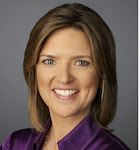
Christiane goes through the major genocides in history starting with the Nazi in Germany followed by Cambodia, Iraq, Saravjo, Rwanda and most recently Darfur.
The CNN press release for Scream Bloody Murder gives a great rundown of the program.

Past as Prologue
Raphael Lemkin, a Polish Jew and lawyer, narrowly escaped the Holocaust, but his parents and 40 other members of his family perished in the slaughter. In the 1940s, Lemkin coined the term “genocide” and lobbied the then-fledgling U.N. for an international convention compelling nations to prevent and stop genocide.
Mark Nelson, vice president and senior executive producer for CNN Productions says: “Lemkin hoped that the international community would ensure that genocide never happened again, but other crusaders against genocide met the same indifference and resistance Lemkin encountered. This film is about their stories – and what we can learn from them.”
Just one generation later, Father François Ponchaud, a Catholic missionary working in Cambodia, tried to alert the world to the torture and mass executions following the rise of the brutal Khmer Rouge regime. Ponchaud published articles, a book, and even spoke before the U.N. to urge action to stop the killing.
“No one believed us” Ponchaud tells Amanpour in the documentary. In fewer than four years, the Khmer Rouge’s reign of terror claimed the lives of nearly two million men, women and children – one fourth of Cambodia’s population.
“No one defends human rights,” the priest says in the documentary. “Governments are cold beasts looking out for their own interests.”
Iraq, Bosnia and Rwanda
In the 1980s, Saddam Hussein unleashed poison gas on the Iraqi Kurdish population, killing tens of thousands, in violation of international law. Amanpour draws on U.S. government documents that show the Reagan Administration opposed measures to sanction Iraq because it was trying to cultivate Iraq as an ally against Iran in 1988. Peter Galbraith, at the time an idealistic staffer in the U.S. Senate, witnessed Hussein’s brutal policy and tried unsuccessfully to get Congress to punish Iraq. The White House continued its support for Hussein. Amanpour questions the Reagan administration officials who made the decisions at the time, including former U.S. Secretary of State George Shultz.
Amanpour returns to the former Yugoslavia, where in the 1990s, she reported on the “ethnic cleansing” of Muslims by Serbs. She reminds viewers that the slaughter in Bosnia happened in full view of the world, captured on 24-hour television news.
Amanpour describes the efforts of Richard Holbrooke, at the time a private citizen who would later become one of President Bill Clinton’s most influential advisors, who tried to persuade the Clinton administration to use military force to stop the principal aggressors, the Bosnian Serbs. It would take three years – and the massacre of 8,000 Muslim men and boys in the town of Srebrenica – to make his case and secure U.S. military support to end the “ethnic cleansing.” Amanpour also interviews Holocaust survivor and Nobel peace laureate Elie Wiesel, who during the opening ceremonies for the U.S. Holocaust Museum in 1993, publicly demanded the newly elected Clinton to intervene in Bosnia.
During an international news conference in 1994, Amanpour challenged Clinton: “Do you not think, that the constant flip-flops of your administration on the issue of Bosnia sets a very dangerous precedent?”
Amanpour also returns to Rwanda, where she reported on genocide there 14 years ago. The atrocities still haunt retired Canadian Lt. Gen. Romeo Dallaire. In 1994, Dallaire was the commander of the U.N. peace-keeping troops in Rwanda. He sounded early warnings about an impending human tragedy but was prohibited from taking military action to prevent the slaughter that eventually claimed the lives of at least 800,000 people. Dallaire, ordered to leave Rwanda by his bosses, tells Amanpour, “I refused a legal order. But it was immoral.”
Amanpour recounts the Clinton administration’s refusal to use the word ‘genocide’ to describe the killing in Rwanda, and the U.N.’s refusal to reinforce Dallaire’s troops. Former U.N. Secretary-General Kofi Annan and former U.S. National Security Advisor Anthony Lake discuss the failures in Rwanda. Amanpour also interviews current Rwandan President Paul Kagame, who says the world was indifferent to the fate of Rwandans.
 Darfur and Beyond
Finally, Amanpour reports on what many consider to be the first genocide of the 21st century: Darfur. “There was no lack of information, there was no lack of understanding, there was a lack of will to stop genocide – year after year after year,” says Eric Reeves, a Smith College professor and one of the founders of the grassroots activism to end genocide in Darfur. Amanpour interviews Dr. Mukesh Kapila, the U.N.’s former top official in Sudan, who reveals what he says is today’s challenge: The U.N. is powerless to compel its members to act, even in the face of mass murder.
There may be a ray of hope in Reeves and Kapila’s frustrated efforts. Human rights groups continue to call attention to the atrocities in Darfur, and activists around the world advocate for Darfur via the Internet, which may hold some promise for maintaining international pressure and keeping the world’s conscience focused on relief action.
Six decades after Lemkin’s challenge never to let genocide happen again, Amanpour ponders what it will take for the world to live up to his challenge and the promise of the Genocide Convention he worked so tirelessly to bring about. The next time the killing starts and someone stands up to scream bloody murder, will anyone listen?

There was a lot of vintage footage of Christiane herself out in the fields reporting on the different genocides.
Scream Bloody Murder will be re-airing on Saturday and Sunday night at 8PM. If you missed out watching it on Thursday night, I would strongly suggest trying to catch it this weekend. This is truly a subject that we can never forget
All content, unless otherwise cited, is © All Things CNN and may not be used without consent of the blog administrator.